
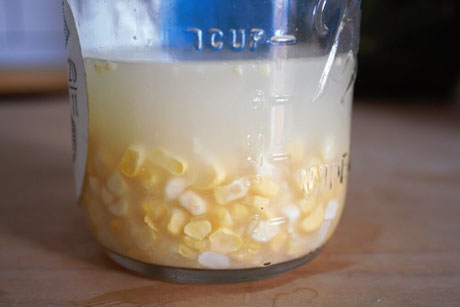
Homemade Corn Steep Liquor for Carp Fishing
Corn Steep Liquor, commonly known as CSL, is a fermented corn extract produced as a by-product of several industrial processes, including brewing, alcohol production, yeast culturing and bioethanol manufacturing.
In the carp fishing world, CSL has become one of the most widely used liquid additives and bait soaks for one very simple reason:
It’s cheap, highly soluble and extremely effective.
Almost every bait company sells its own version of CSL, usually re-bottled from large industrial suppliers that distribute it in massive bulk tanks.
Different Types of CSL
CSL can vary quite a lot in colour, density and flavour depending on the original production process.
The lighter versions usually come from corn beer fermentation, while the darker and thicker products are often derived from corn molasses processing.
For carp fishing purposes, however, they all work very well.
The main differences are simply in taste profile:
* Some are more acidic and sour
* Others are sweeter and richer
Carp seem to appreciate all of them.
Why I Never Produced It at Home
The price of CSL usually ranges from around €3 to €10 per litre depending on the quantity purchased. In larger volumes, the cost becomes very low, which is why I was never particularly interested in producing it myself.
The process takes time, requires fermentation management and constant monitoring.
However, I also understand the mindset of the true self-maker.
Sometimes the satisfaction of producing your own bait ingredients is worth far more than the actual financial saving.
For this reason — and after many requests from readers — I decided to outline a simple homemade process inspired by traditional corn fermentation methods used in home whiskey production.
Homemade CSL Process
For this recipe, I recommend starting with:
* 1kg of cracked maize
* Water
* 100g sugar
* 30g lactobacillus culture
* 50g active dry brewer’s yeast
Whole maize can also be used, although cracked maize is much easier to process.
Step 1 – Soaking the Corn
Place the maize into a container and cover it with at least 3–4cm of water above the grain level.
Leave it to soak for 24 hours.
Step 2 – Cooking
After soaking, boil the entire mixture for at least two hours, adding the 100g of sugar during the process.
Once finished, allow everything to cool down completely to room temperature.
Step 3 – Blending and Fermentation
Blend the cooked maize thoroughly into a mash.
At this stage, add:
* 30g lactobacillus
* 50g active dry brewer’s yeast
Mix everything thoroughly and transfer it into a fermentation container.
Leave the mixture to ferment for at least 10 days.
During fermentation, check the container daily and release the excess gas pressure that forms naturally inside the vessel.
Finishing the CSL
Once fermentation is complete — meaning foam and CO₂ bubbles are no longer actively forming — boil the mixture again for at least 5 minutes.
This second cooking stage stabilises the product, stops bacterial activity and also allows you to reduce the water content if you want a thicker CSL.
The longer you reduce it, the denser and creamier the final liquid becomes.
At this point, the CSL can already be bottled and stored away from direct sunlight.
Increasing Stickiness and Density
If you prefer a thicker and more adhesive CSL for spod mixes, pellets or boilie soaking, you can add:
* 300ml corn syrup per litre of CSL
Mix thoroughly using an electric whisk before bottling.
Thanks to the fermentation process and sugar content, this type of homemade CSL generally preserves very well without major storage issues.
In my book you can find detailed descriptions of many bait ingredients of both plant and animal origin.
Boilies,the Art and Science of Carp Bait