
DMPT in Carp Fishing: Why It Works, When It Works… and When It Doesn’t
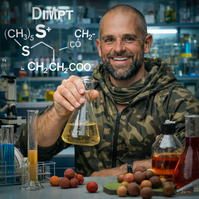
D.M.P.T. – Technical Background and Practical Use in Carp Fishing
The numerous questions regarding this substance, received during the live stream on November 21st, clearly require clarification and a more in-depth article on this so-called “mysterious” secret ingredient.
Let us immediately clarify a common misconception: DMPT is a naturally occurring compound, found in algae, plankton
and certain types of crustaceans.
It is a sulphur-based amino compound, very similar to betaine, with which it shares a well-established reputation as a
feeding stimulant, specifically targeting cyprinids and, more
generally, shoaling fish species.
This substance was originally studied in aquaculture, particularly for tilapia, a species widely farmed in Indochina, where DMPT was developed as a palatability enhancer for nutritionally poor feeds.
Sulphur-containing amino acids include methionine, cysteine, homocysteine and taurine, all of which have long been recognised for their attractive properties on carp — a concept repeatedly discussed in my books and bait formulations over the years.
Chemical Identity and Nomenclature
DMPT is known under numerous aliases, including:
Dimethyl-β-Propiothetin Hydrochloride,
(2-carboxyethyl) dimethylsulphonium chloride,
3-dimethylsulphonio-propionate,
beta-dimethylsulphonio-propionate (β-DMSP),
dimethyl-beta-propiothetine,
dimethylpropiothetine hydrochloride,
S-dimethyl-beta-propiothetine,
dimethylsulphonium propionate,
and related denominations.
From a practical standpoint, DMPT represents the hydrochloride form of DMSP, synthesised for industrial use.
Manufacturer Data and Claimed Performance
According to data released by Sustar, a major Chinese producer specialised in feed chemistry, DMPT is a naturally occurring sulphur compound belonging to a fourth-generation class of aquatic phagostimulants.
The manufacturer reports the following comparative attractive power:
-
1.25× that of choline chloride
-
2.56× that of glycine betaine
-
1.42× that of methyl-methionine
-
1.56× that of glutamine
Based on these internal studies, DMPT would represent the most effective compound in terms of feeding stimulation.
Additional claims include improved feed intake, hormone-like water-soluble activity and enhanced resistance to stress associated with capture, handling and transport.
It must be stated clearly that these data originate from the manufacturer and should therefore be evaluated with due caution. Nevertheless, Sustar is a well-established company whose research is generally considered reliable within the aquaculture sector, albeit not directly linked to recreational angling.
Notably, the compound is also promoted for its ability to improve the flavour profile of tilapia flesh, imparting a more pronounced seafood-like taste.
Scientific Background Relevant to Carp Fishing
Dimethylsulphonio-propionate (DMSP) is an organosulphur compound with the molecular structure:
(CH3)2S+–CH2–CH2–COO−(CH₃)₂S⁺–CH₂–CH₂–COO⁻(CH3)2S+–CH2–CH2–COO−
This zwitterionic metabolite is naturally present in marine phytoplankton, macroalgae and certain terrestrial and aquatic vascular plants.
Its primary biological role is that of an osmolyte, although numerous additional physiological and ecological
functions have been identified.
DMSP was first isolated from the red marine alga Polysiphonia.
Due to the high cost, low purity and industrial limitations associated with natural extraction, the compound is now produced
synthetically.
Industrial synthesis involves the reaction of dimethyl sulphide with 3-chloropropionic acid, resulting in dimethyl-beta-propiothetine hydrochloride (DMPT).
Physical Properties and Bait Application Limits
DMPT is commercially available as a white crystalline powder, highly soluble in water.
The manufacturer declares thermal stability up to approximately 100 °C, a threshold that represents a significant
limitation for use in boilies — an application I personally do not
recommend.
Even the producer itself suggests inclusion only in cold-pressed feeds or low-temperature extruded products.
Related Compound: Ergothioneine
A chemically related substance is thiobetaine, also known as L-(+)-ergothioneine (ET).
This sulphur-containing amino acid is synthesised exclusively by Actinomycetales bacteria and certain fungi.
Initially isolated from Claviceps purpurea, ergothioneine is derived from L-histidine, converted into the betaine form known as hercynine.
It is found in both plants and animals, while mammals acquire it primarily through diet, such as mushrooms or oats.
Why It Works on Carp
From a carp fishing perspective, the effectiveness of DMPT should be interpreted not as a miracle attractor, but as a multi-level behavioural and chemical stimulus.
As a sulphur-based compound naturally associated with planktonic organisms, algae and crustaceans, DMPT integrates seamlessly into the chemical signature of a carp’s natural feeding environment. Carp are evolutionarily predisposed to recognise sulphur-containing molecules as indicators of biological activity and protein-rich food sources.
A key factor lies in its role as an osmoregulatory signal. Compounds such as DMSP are involved in cellular stress regulation within aquatic organisms, and carp appear particularly sensitive to these cues. Once detected in the water column, they can activate feeding-related sensory and neural pathways, increasing investigative behaviour even under conditions of reduced metabolic activity.
In practical terms, DMPT does not merely attract fish; it tends to amplify competitive feeding dynamics, particularly in shoaling cyprinids. This characteristic explains both its effectiveness in generating feeding responses and its potential drawback: the preferential activation of smaller, more aggressive fish before larger, more cautious specimens commit.
For this reason, DMPT should be regarded as a situational tool, capable of unlocking difficult conditions, but not necessarily suitable for selective big-fish strategies.
Legal Framework
Before addressing practical usage, one important clarification is required.
According to EU Regulation 1831/2003, DMPT is not authorised for use in animal feed.
As such, it is considered illegal for feed application within the European Union, due to the lack of validated
safety assessments.
This information is provided solely for transparency and correctness.
Practical Dosage in Sport Fishing
Due to its very high concentration, typical dosages in sport fishing range from:
0.5 to 5 grams per kilogram of groundbait
To ensure even distribution, it is advisable to first dissolve the powder in water or in any water-based liquid food, and only then incorporate it into the groundbait or method mix.
(For reference, aquaculture dosages are typically around 100–200 g per tonne.)
Optimal Applications
In practical fishing situations, the most effective use of DMPT is within:
-
groundbait
-
method mixes
These applications allow for the creation of a stimulated feeding area, within which rigs and hookbaits can be accurately positioned.
Use in Spomb mixes is also highly effective; in this case, dosages can be increased to 5–10 g per kg of mix.
Synergistic Formulations
One of the most effective synergistic blends involves combining DMPT with:
-
lysine
-
betaine
-
methionine
-
glutamine
in the following ratio:
2 – 2 – 4 – 1 – 1
This compound can then be applied at 1–10 g per kg, depending on conditions.
The formulation is effective on all cyprinid species and is equally suitable for pole and feeder fishing groundbaits.
Use in Boilies and Liquid Foods
As previously stated, I do not recommend the direct inclusion of DMPT in boilies.
However, the synergistic compound described above may be used as a liquid food additive, dissolving 10 g in 200 ml of fish sauce or liquid liver.
If boilies are produced using this liquid, cooking temperatures should not exceed 80 °C, requiring controlled steam cooking and extended exposure times. This approach may result in highly soluble baits, particularly useful during competition phases where groundbaiting is restricted.
Final Considerations
I hope this article has clarified several aspects of this ingredient and contributed to a more rational understanding of its potential.
More importantly, it aims to move away from the concept of miracle substances. For anglers specifically targeting large, experienced carp, excessive stimulation can often be counterproductive, favouring nuisance species and small, competitive fish.
That said, in winter conditions, characterised by reduced activity and stable water, DMPT may represent a viable option in non-competitive or open-water scenarios.
Even in such cases, however, the most consistent strategy in truly difficult conditions often remains the use of a small pop-up accompanied by a tight ring of active maggots.
Discover the science behind carp bait design. Get the book here.