
Total Scopex Squid Liver Boilies: Advanced Recipe, Organic Chemistry and Carp Feeding Science
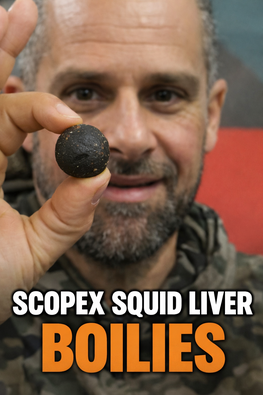
Total Scopex–Squid–Liver
The news has already begun to circulate, generating speculation and the usual mythology: Nash Bait is shutting down its bait division. For many long-time users, this represents the disappearance of a reference point built on trust and consistent results.
The actual reasons remain internal to the company, but from a technical standpoint two factors are highly plausible. First, the escalating cost of raw materials—particularly high-quality marine and animal derivatives. Second, the regulatory divergence between the United Kingdom and the European Union. Within the EU, fishing baits are legally aligned with animal feed, meaning strict traceability, safety standards, and certification are mandatory. The UK does not fully align with these frameworks, creating a tangible risk of export barriers, customs delays, or even product seizure. Under such constraints, maintaining a dynamic and profitable international bait business becomes increasingly complex.
This context prompted me to pay tribute to one of the most iconic bait concepts ever developed: the Scopex Squid Liver.
Historical and Functional Context
Many anglers are unaware that Scopex—the most legendary flavour in carp fishing—originated from Catchum, founded by Rod Hutchinson and Kevin Nash, based on a creation by John Baker. Following the separation of the founders, both retained rights to use and commercialize the flavour within their respective companies.
The Scopex Squid Liver concept is built on a simple but highly effective biochemical premise:
- marine protein hydrolysates (squid)
- terrestrial organ extracts (liver)
- ester-based aromatic triggers (Scopex)
Over time, formulations evolved—often reducing nutritional density in favor of rapid attraction profiles suited to modern, mobile fishing strategies. Despite these changes, the core effectiveness remained intact: fast detection, strong gustatory stimulation, and high selectivity toward large carp.
This aligns perfectly with my concept of Total Boilies—a bait designed to balance solubility, digestibility, and metabolic reward, without relying on heavy prebaiting.
The Base Mix: A Dynamic Total Platform
This formulation is deliberately light, highly digestible, and structurally reactive in water. It promotes controlled leakage of low molecular weight attractors while maintaining sufficient nutritional coherence.
Dry Mix (1 kg total):
- 30% re-milled durum wheat semolina
- 20% micronized sponge biscuit
- 20% micronized toasted bread
- 10% squid meal
- 10% chicken liver meal
- 10% WPC 80 (whey protein concentrate)
This matrix ensures:
- rapid hydration and diffusion
- balanced amino acid profile
- moderate lipid content for controlled release kinetics
A more neutral variant can be achieved using a commercial birdfood base, relying entirely on the liquid phase for functional identity.
Liquid Phase: The True Engine of Attraction
The liquid component defines the bait’s biological performance. It governs solubility, signal propagation, and receptor activation in carp.
Option 1 — Functional Commercial Blend
For 1 kg of mix:
- 50 ml liquid liver extract
- 50 ml liquid squid extract
- 30 ml propylene glycol
- standard dose intense sweetener
- standard dose Scopex flavour
- standard dose squid flavour
Add 6–7 medium eggs depending on ambient humidity and temperature.
This formulation delivers a consistent and accessible attractor profile based on pre-digested fractions and volatile compounds.
Option 2 — Full Self-Made Liquid Food (Advanced)
This is where the formulation reaches its full biochemical potential.
Ingredients:
- 500 g whole squid or cuttlefish (including viscera)
- 500 g chicken liver
- 200 g salt
- 10 g bromelain
Blend thoroughly and allow enzymatic pre-digestion for at least 48 hours at temperatures above 30°C. Vent and stir regularly.
Scientific rationale:
- Bromelain catalyzes proteolysis, breaking down complex proteins into peptides and free amino acids.
- This increases the concentration of low molecular weight nitrogen compounds, which are primary feeding triggers for carp.
- Salt acts both as a preservative and as an osmotic facilitator, enhancing extraction efficiency.
The result is a stable, highly bioavailable liquid rich in:
- free amino acids (e.g., alanine, glycine, glutamic acid)
- short-chain peptides
- nucleotides and amines
These compounds directly stimulate the carp’s chemosensory system, particularly taste buds located on barbels, lips, and pharyngeal structures.
Full Self Formulation (Top Tier)
For 1 kg of mix:
- 100 ml self-made liquid food
- 30 ml propylene glycol (with 10 drops butyric acid + 10 drops diacetyl dissolved)
- 10 ml high-intensity sweetener
Functional chemistry:
- Butyric acid acts as a potent volatile attractor, detectable at extremely low concentrations.
- Diacetyl contributes a creamy, buttery note, enhancing palatability through associative feeding memory.
- Propylene glycol stabilizes volatile compounds and improves dispersion in water.
Processing
Steam cooking:
- 8 minutes for 18 mm diameter boilies
Drying:
- 48 hours before storage
Optional preservation (added to liquid phase):
- 5 g potassium sorbate
- 5 g calcium propionate
These inhibit microbial growth without significantly altering the bait’s biochemical profile.
Biological Performance and Field Application
This bait is designed to operate on multiple sensory and metabolic levels:
- Olfactory detection via dissolved amino acids and volatile fatty acids
- Gustatory confirmation through peptides and nucleotides
- Post-ingestive feedback driven by digestibility and metabolic reward
Carp (Cyprinus carpio) exhibit highly developed chemoreception, capable of detecting amino acids in concentrations as low as parts per billion. A bait like this does not merely attract—it communicates nutritional value.
The result is a bait that:
- enters the swim rapidly
- maintains feeding confidence
- selectively targets larger, more experienced fish
Closing Note
This is not a nostalgic imitation. It is a technical evolution of one of the most successful bait concepts ever created—rebuilt using modern understanding of organic chemistry and carp physiology.
If you are satisfied with assembling ingredients, you will catch fish.
If you understand why this works, you will build systems that catch fish anywhere.
That difference is exactly what I break down in depth in Boilies, The Art and Science of Carp Bait.
The link is below.