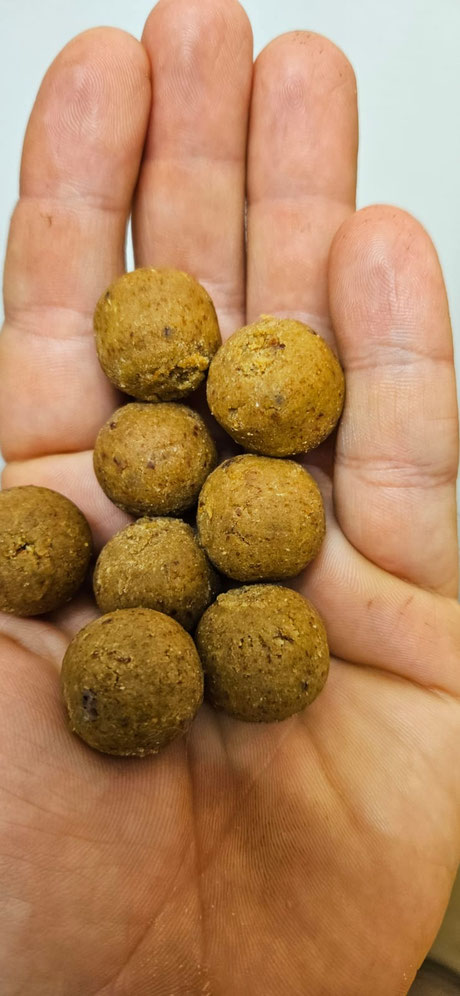
With the first real warm spell and the end of the spawning period, the classic Robin Red boilie recipes and uncompromising nutty baits immediately come back to mind. But every bait maker is always looking for something new. That’s part of the game for us — a passion we cultivate alongside fishing itself — but it’s also true that presenting something different from the standard approach can bring huge advantages.
So today I want to show you a simple, cheap and highly effective boilie mix based around a couple of transformed and fermented ingredients. A mix that can easily be adapted into several different hunting-style boilies, ideal for quick and selective summer fishing.
Our target is big carp and large grass carp as well — fish that many anglers actively pursue throughout the warmer months.
The whole concept is based around creating synergy between the hookbait and a heavy loosefeed approach built around flaked maize and small brewer’s yeast & spent grain pellets. The key point is that the same ingredients used in the feed are also transformed, enhanced and incorporated directly into the boilies themselves.
I keep insisting on this synergy between heavy baiting, boilies and the rig because I genuinely believe this is the future of serious self-made bait in modern carp fishing. Nothing should be left to chance. Proper planning allows you to create massive attraction from the very first minutes of a session while also keeping costs under control.
A small amount of high-quality boilies combined with a large carpet feed made from low-cost ingredients.
The two products I recommend are the classic livestock-grade flaked maize and Höveler brewer’s yeast and spent grain horse pellets. These small pellets have incredible attraction and flavour, sink quickly and break down fast.
This fermented pellet is also perfect for filling PVA mesh bags or small spod mixes, making it extremely versatile while remaining very cheap at around €2.50 per kilo.
Now let’s move on to the actual mix composition, which starts with processing the flaked maize in order to maximise the attraction of fermented and broken-down starches, changing both its flavour profile and overall palatability.
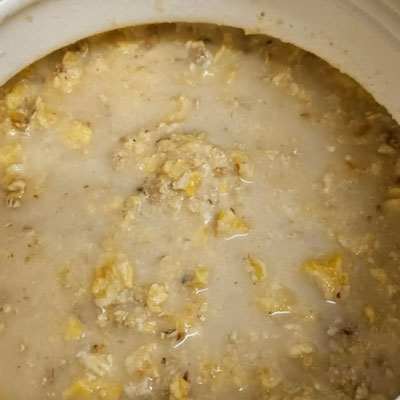
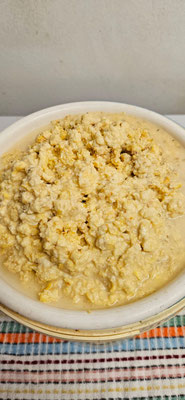
The process involves predigesting and fermenting the flaked maize using baker’s yeast in a very simple way, taking advantage of the warm seasonal temperatures.
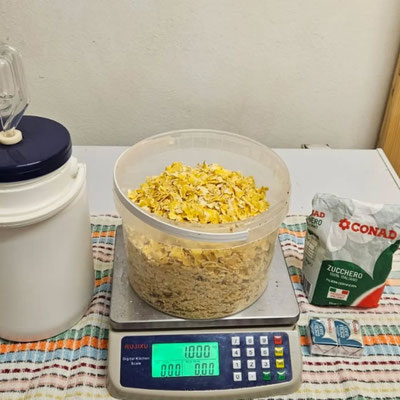
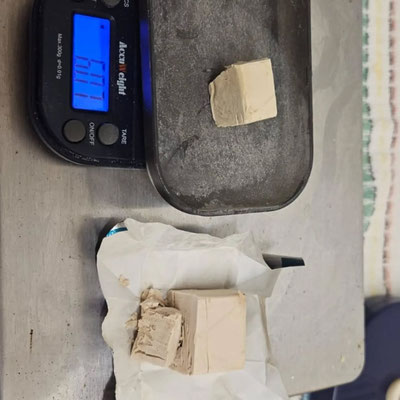
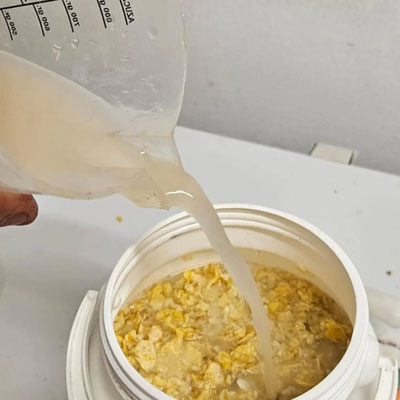
For every kilo of flaked maize, add 3 litres of water containing 5–6 grams of fresh baker’s yeast and 100 grams of sugar.
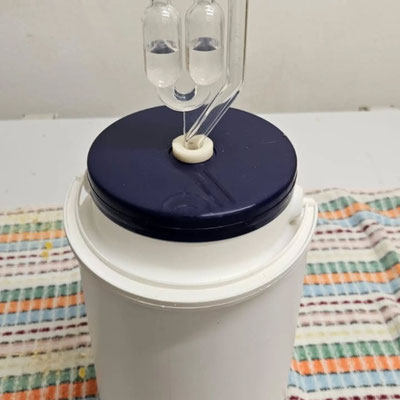
Place everything into a light-coloured bucket, seal it and leave it in the sun for two days.
Using a bucket that isn’t too dark is important because direct sunlight can otherwise push temperatures above 50°C, which would kill the yeast culture.
Ideally, the container should be fitted with an airlock or fermentation vent, otherwise you’ll need to manually release excess CO2 once per day.
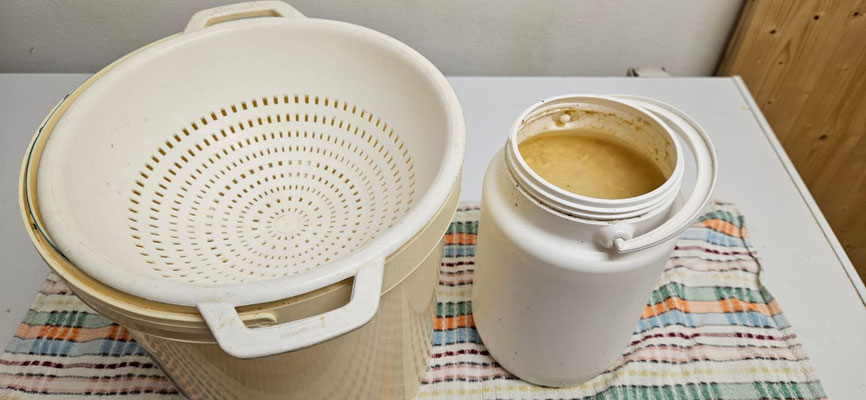
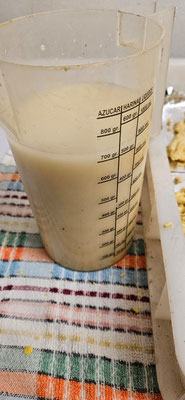
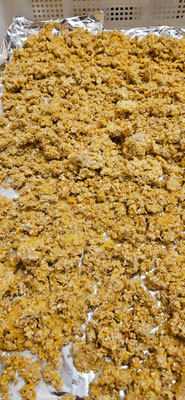
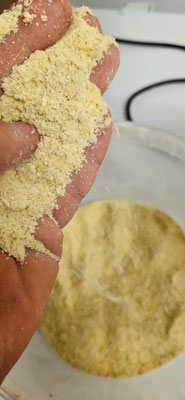
You’ll find photos of the whole process in the gallery at the end of the article.
After a couple of days of fermentation, squeeze the flaked maize thoroughly using cloth or gauze and collect the liquid for later use, as I’ll explain further on.
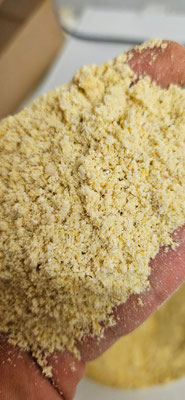
The squeezed pulp should then be spread onto a sheet or mesh tray and dried in a ventilated, dry environment before grinding it into a fine flour using a grain mill. The result is a highly attractive meal with a very intense flavour profile.
A grain mill is an important piece of equipment for anyone wanting to turn pellets, flakes or dry pet food into fine meals. It’s definitely worth investing in one, possibly together with friends to split the cost.
The second ingredient in the mix is the brewer’s yeast and spent grain pellet, which also needs to be ground into meal form. Alternatively, you can use inactive feed-grade yeast powder, but ground pellets are cheaper and also give you the advantage of using the same product in your loosefeed.
The mix is completed with remilled durum wheat semolina and skimmed milk powder, resulting in a total production cost of under €3 per kilo when producing around 10kg of base mix.
The recipe:
- 30% fermented flaked maize meal
- 30% brewer’s yeast & spent grain pellet meal
- 30% remilled durum wheat semolina
- 10% skimmed milk powder
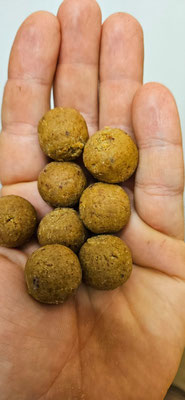
As I mentioned earlier, this mix lends itself to several different interpretations. One variation I strongly recommend is a banana ester version, which works exceptionally well for both carp and grass carp.
For rolling liquids, I recommend Maltodex — a stabilised fermented malt extract used in animal nutrition. If needed, this can be replaced with CSL (Corn Steep Liquor), commonly available from specialist bait suppliers, although CSL is generally more expensive.
Alternatively, you can further process the liquid recovered from the fermented maize and turn it into an outstanding liquid food.
First, reduce the liquid by roughly half by simmering it slowly to evaporate the excess water content. Once cooled, dissolve fresh baker’s yeast into it at a ratio of 100 grams per 100ml, then add 5 grams of bromelain per kilo and 10% salt. Leave the liquid to predigest and ferment carefully.
To make the boilies, mix 1kg of base mix with:
- 100ml Maltodex (or CSL or the homemade fermented liquid)
- 5 drops ethyl acetate
- 3 drops butyric acid
Half dosage of intense sweetener
Below you’ll find the gallery images showing the different fermentation stages of the flaked maize process.
ARE YOU PASSIONATE ABOUT MAKING BOILIES?