How to Dose Flavours in Carp Baits
“Use 3 to 10ml per kilogram of mix.”
This is the standard recommendation you read on almost every bottle of flavouring.
But how should these flavours actually be dosed in a real bait?
This is one of the most misunderstood topics in carp bait design.
Your Nose Is Not a Reliable Reference
Let’s start with one very important concept:
The human nose is not a suitable tool for evaluating boilie flavour dosage.
Carp possess an incredibly sophisticated chemical sensitivity, much closer to that of dogs than to humans — and the comparison is absolutely deliberate.
What smells “light” to us can already be extremely powerful underwater for a carp.
In fact, many of the great carp anglers from the past used to say:
“If you can smell the flavour strongly, there’s probably too much of it for the carp.”
And honestly, there’s a lot of truth in that statement.
Modern Carp Are Different
There is, however, an important difference compared to the 1980s and 1990s.
Back then, carp had almost no exposure to synthetic flavourings.
Today’s carp, on the other hand, have encountered artificial flavours for decades and are far more accustomed to them.
This means that in certain situations — especially in pressured waters — slightly higher dosages can sometimes still work effectively.
But overdosing only makes sense if it is done with a precise purpose.
Understanding Minimum Dosages
If a manufacturer recommends a minimum dosage of 3ml per kg, it usually means that carp are already perfectly capable of detecting far lower concentrations.
In reality, even 0.5–1ml per kg may already be chemically detectable to a carp despite being almost imperceptible to us.
Minimum dosages are generally determined according to several factors:
* Results from fishing tests
* Losses caused by incorrect cooking
* Commercial practicality for average users
* Economic considerations
* Standardisation of flavour concentration
Flavour Dosage and Fishing Style
One of the most important variables is the type of fishing you are doing.
Long-Term Baiting Campaigns
When preparing bait for prolonged prebaiting campaigns, flavouring should generally be kept at minimum levels.
Why?
Because over time the real attraction increasingly comes from:
* The nutritional profile
* Natural leakage from the mix
* Fermentation
* Amino acid release
* Feeding confidence
In some very long-term campaigns, synthetic flavours can even be reduced dramatically or omitted entirely.
Instant Fishing
Fast fishing is a completely different situation.
When fishing short sessions or instant-action situations, medium-to-high flavour dosages often become much more useful because immediate attraction becomes a priority.
Water Chemistry Changes Everything
Another critical factor is the chemistry of the water itself.
This is rarely discussed properly in carp fishing.
In Alkaline Waters
Most lakes tend to be slightly alkaline.
In these conditions:
* Acidic flavours are usually dosed lower
* Basic flavours can be dosed higher
This happens because substances tend to diffuse more aggressively when their chemical profile differs strongly from the surrounding water.
In Acidic Waters
In acidic waters, the opposite logic applies:
* Basic flavours are reduced
* Acidic flavours are increased
Again, the difference in chemical potential influences the speed and intensity of release.
Water Clarity and Organic Density
Water turbidity also has a huge impact on bait chemistry.
In dirty or highly coloured water filled with suspended organic material, the movement of soluble substances becomes slower.
Osmosis is reduced and fish sensory organs are constantly exposed to environmental interference.
In these situations, anglers often increase:
* Flavours
* Liquid foods
* Sweeteners
* Soluble additives
Conversely, in very clear water — which is often alkaline — excessive attraction can actually become counterproductive.
Fish living in crystal-clear environments are used to detecting extremely subtle food signals.
An overly aggressive bait may appear unnatural.
Final Thoughts
To summarise:
Flavour dosage should always be adjusted according to:
* The type of bait
* The fishing situation
* Water chemistry
* Water clarity
* Session duration
* The feeding strategy
Our own nose has very little relevance in all this.
At most, smell simply gives the angler confidence in the bait.
But what smells “good” to us does not automatically mean it will be more effective for big carp.
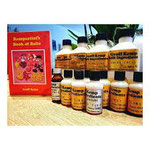
In my book [Boilies by The Bait Guru](https://www.thebaitguru.it?utm_source=chatgpt.com) you can find dozens of boilie recipes together with detailed flavour dosage guidelines and attractor strategies.
Boilies,the Art and Science of Carp Bait