
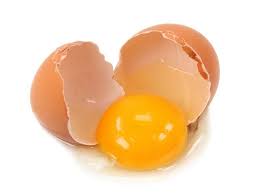
The Egg Test: Understanding Feed Mechanics in Boilie Mixes
I receive many questions about the “egg test” described in the pet food ingredients chapter of my book .
In simple terms, the egg test is a practical method used to understand whether a mash, birdfood or pellet can be included in a boilie mix without compromising its rolling mechanics.
Some feeds are actually so well balanced that they already behave like complete boilie mixes and only require eggs and liquids to become fully workable.
What Can Be Tested?
The test works with almost any feed ingredient, including:
* Birdfoods
* Mash feeds
* Dog food
* Cat food
* Pig pellets
* Cattle feed pellets
* Fish feed pellets
Pellets obviously need to be ground into flour first using a grain mill or suitable grinder.
With ornithological birdfoods, however, the test can also be performed without micronising the ingredient, although reducing the particle size almost always improves rolling performance and final bait texture.
Simplified Egg Test Procedure
The test itself is extremely simple.
1. Crack one medium egg into a bowl
2. Gradually add the ingredient being tested
3. Mix continuously until the dough reaches the ideal consistency for extruding and rolling
At this point, the amount of dry ingredient used gives us very important information about the structural behaviour of the product.
Interpreting the Results
100–130g per Egg
If the perfect consistency is reached using around 100–130g of ingredient, the product is already mechanically balanced.
This means it contains a good balance of:
* Proteins
* Starches
* Fibres
* Binding properties
In practical terms, this type of ingredient can often be included at very high levels inside a boilie mix — even 50–70%.
Less Than 100g per Egg
If the dough reaches rolling consistency with less than 100g, the ingredient is excessively rich in starch.
This usually means:
* Strong binding power
* High water absorption
* Poor protein balance
These products generally shouldn’t exceed around 40% inclusion unless corrected with more protein-rich ingredients such as:
* Skimmed milk powder
* Fishmeal
* Yeast
* Casein
More Than 130g per Egg
If more than 130g are needed, the ingredient is usually too rich in protein and lacks sufficient starch.
This means the mix struggles to bind properly and requires structural correction.
In these cases, the ingredient can still work very well, but usually:
* At lower inclusion levels (around 30%)
* Or combined with starchy flours such as maize flour or semolina
Why This Test Is So Useful
The real beauty of the egg test is that it reveals how many industrial feeds are already almost complete boilie mixes.
Once micronised, many pellets become:
* Nutritionally balanced
* Mechanically stable
* Extremely economical
* Very attractive to carp
This opens up a huge world of low-cost but highly effective bait ingredients.
The Importance of a Grain Mill
A grain mill is one of the most useful tools a serious bait maker can own.
It allows you to:
* Grind pellets into flour
* Create custom textures
* Blend ingredients evenly
* Produce large quantities of bait cheaply
In practical terms, you can build entire boilie mixes simply by combining and micronising various feeds and pellets together.
Considering the very low wholesale price of many livestock feeds, this becomes an extremely economical way to produce large volumes of interesting bait.
And often, these feeds are already nutritionally superior to many commercial ready-made boilies.
In my book you can find many more practical bait design systems and ingredient analysis methods.
Boilies,the Art and Science of Carp Bait